Perfector Floor

Moh's Stiffness Test

What Is Moh's Stiffness Test

The Mohs Hardness Test is a simple field method used to determine how resistant a concrete surface is to scratching. In practical terms, it tells you how hard or soft the top layer of the concrete is. The test is based on a scale from 1 to 10, where each level represents a material with known hardness. When applied to concrete floors, it does not measure the overall strength of the slab or its structural capacity. Instead, it focuses only on the surface layer.

A higher Mohs value means the surface is more resistant to scratching and generally denser, while a lower value indicates a softer and weaker surface.

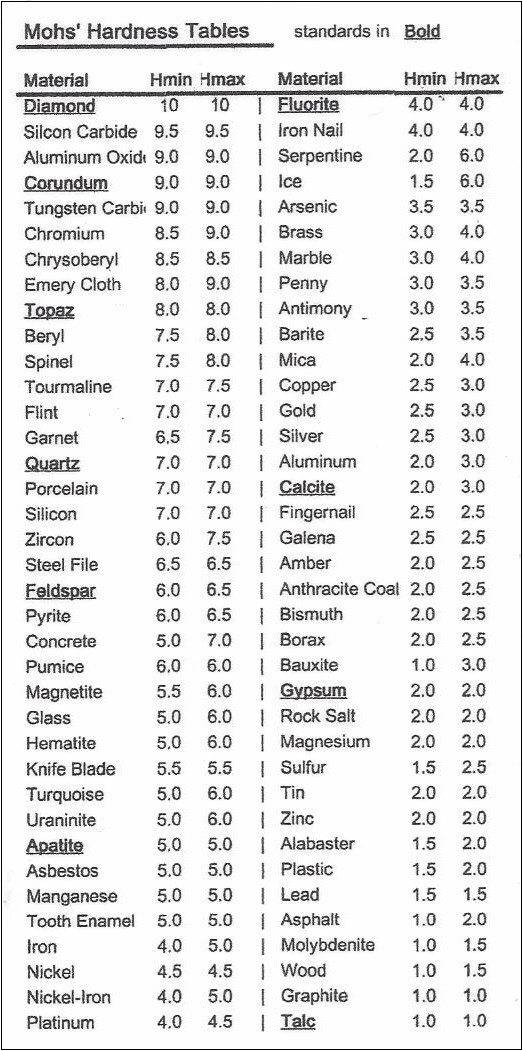
The Mohs hardness table is a scale from 1 to 10 that ranks materials by scratch resistance, from soft (talc) to very hard (diamond). It is used to quickly compare and estimate material hardness.
Why To Check Surface Stiffness

The Mohs stiffness test is important because it provides a practical indication of how the surface will behave under mechanical interaction. It helps predict the rate of surface wear, including dust generation caused by micro-abrasion over time, and it also estimates resistance against wheel traffic from forklifts, reach trucks, and similar loads that induce repeated surface grinding and polishing effects.

A higher Mohs rating generally correlates with reduced material loss at the surface, which means lower dusting potential, fewer visible wear tracks, and better retention of surface integrity under abrasion.

Measuring surface hardness before grinding and polishing is essential for selecting the appropriate grinding strategy. It determines the correct tooling system, grinding sequence, machine operating parameters (such as speed and RPM), and overall processing stages.

It also guides the choice and dosage of densifiers required to achieve optimal surface densification, durability, and finish quality.

How To Check Surface Stiffness

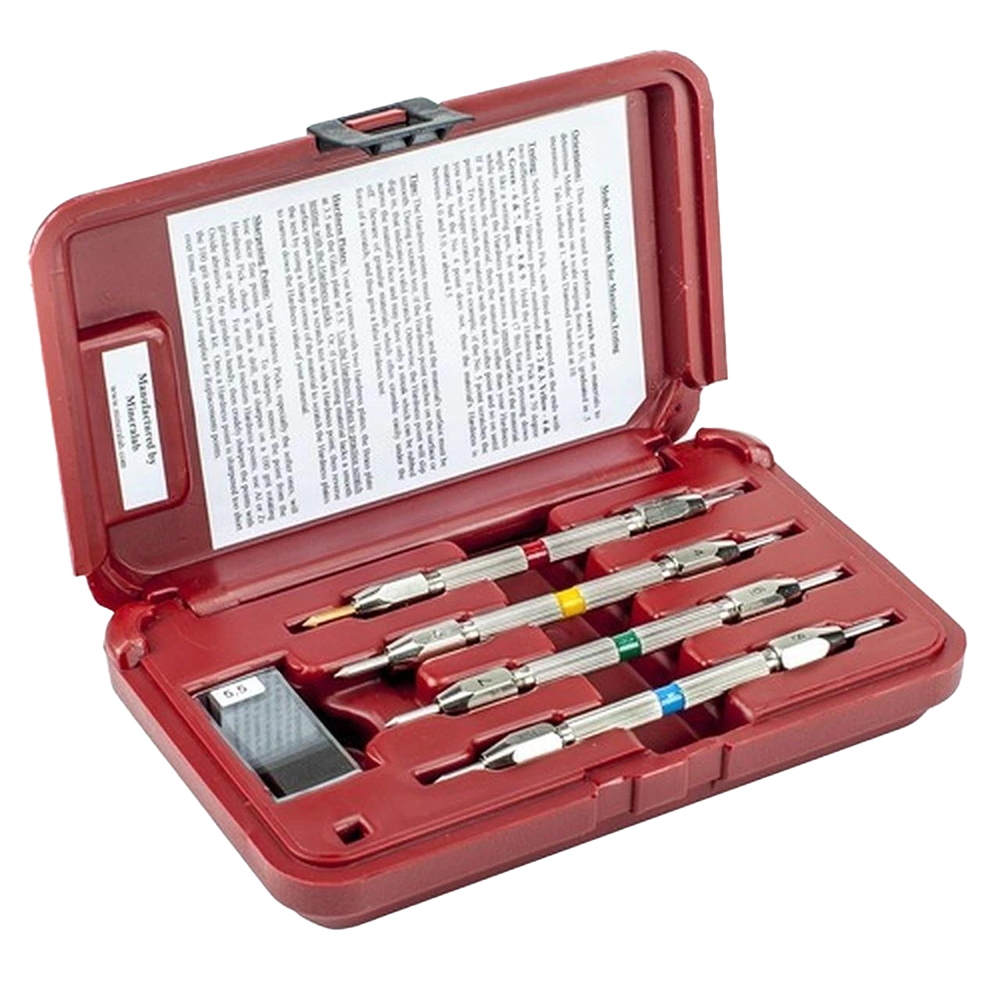
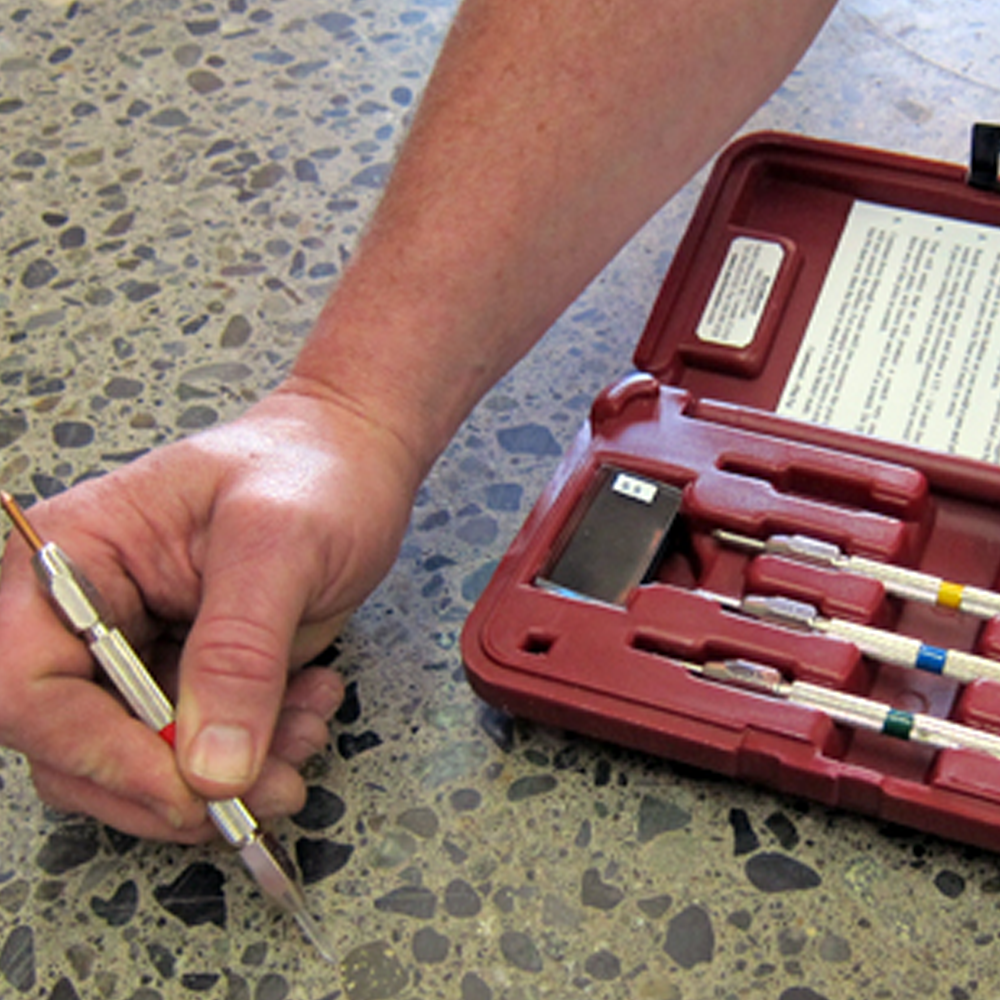
A set of Mohs picks or similar reference tools is used. The test begins with a tool of the highest hardness (#9). This tool is pressed against the surface and dragged across it to see whether it creates a real scratch. A real scratch forms a visible groove, while a false mark can usually be wiped away.

The process is repeated using tools of different hardness levels. The goal is to identify two points: the hardest tool that does not scratch the surface, and the softest tool that does. The actual hardness of the concrete lies between these two values. Since concrete can vary across the floor, the test should be repeated in multiple locations to obtain reliable results.

Explore more

Laser Grinding

Our advanced measurement technologies and engineering methods

International Flatness Standards

Detaily understand the flatness standards like ASTM, TR34 and VDMA

Importance of Floor Flatness

Why floor flatness can affect the operation's speed, safety, and cost..

Get In Touch
Find Us
Follow Us

Send us a message

Please enable JavaScript in your browser to complete this form.