
Perfector Floor

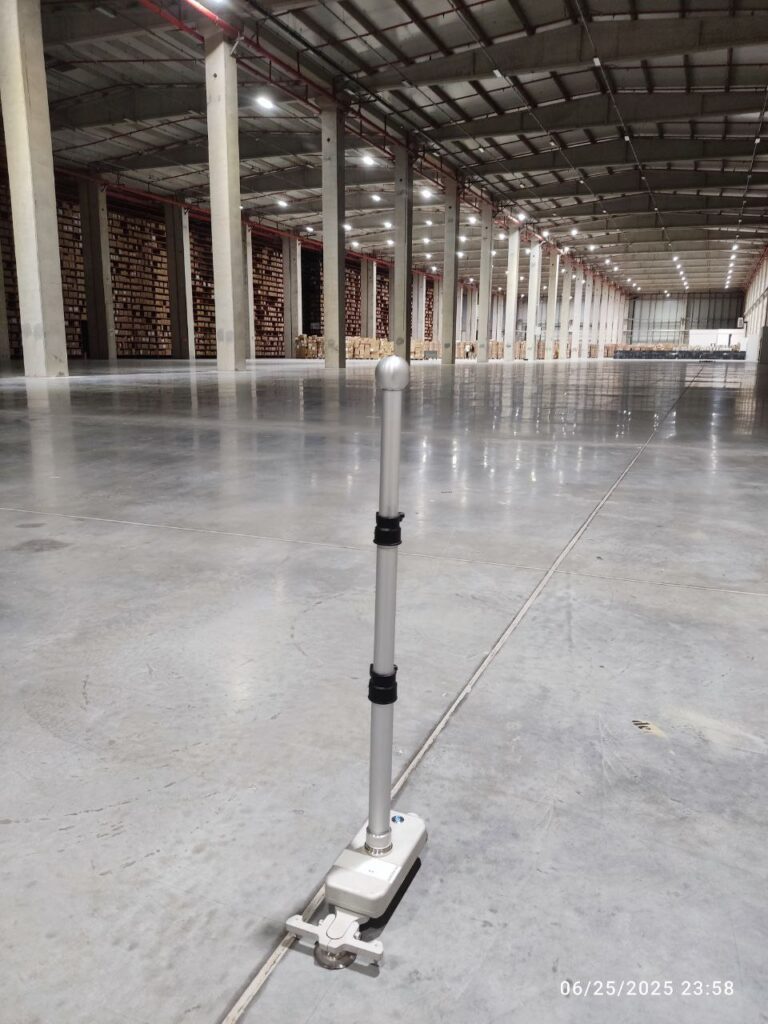
Flatness Test With Dipstick

What is Dipstick?

The Dipstick test is a precise method used to measure the flatness and levelness of concrete floors. Flatness refers to how smooth and even the surface is over short distances, while levelness describes how much the floor deviates from a horizontal plane over longer distances.

The device records small elevation differences along defined measurement paths, creating a detailed profile of the floor surface. It is specifically designed for this purpose and operates in accordance with international standards such as ASTM E1155 (latest revision 2023), ACI 117 (2010), TR34 (4th Edition, 2013), and VDMA Guideline.
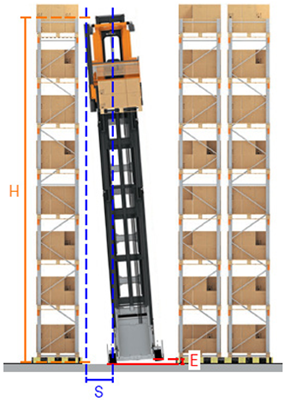
Why Is Floor Flatness So Important?

Floor flatness is a critical performance parameter in industrial environments. Even small surface deviations directly impact forklift stability, lifting accuracy, safety, and equipment lifespan. In high-bay and automated systems, inadequate flatness leads to operational inefficiencies, increased maintenance costs, and safety risks.

Explore more to understand how flatness defines operational efficiency and why precise engineering solutions are required.

How To Check Floor Flatness?

The measurement process is carried out along predefined lines across the floor, following the requirements of the selected standard. The Dipstick Floor Profiler is placed on the surface and moved step by step, recording elevation differences between consecutive points.

The test is performed systematically to cover representative areas, including critical zones such as VNA aisles or FM traffic paths. The measurement pattern, spacing, and direction are all defined by the applicable standard (such as TR34, ASTM, ACI, or VDMA).

All data is collected digitally, ensuring high accuracy and repeatability. The result is a detailed profile of the floor condition.

Evaluation

The collected data is analyzed in accordance with the specified standard for the project. Each standard defines its own evaluation method and acceptance criteria depending on the type of floor and its intended use.

After completing the measurements, the results are not only compared to the required limits but also used to develop practical and project-specific solutions. This includes identifying problem areas, understanding the severity of deviations, and determining whether corrective actions are needed.

Based on this evaluation, a technical action plan is prepared. This plan is tailored to the project requirements and aligned with the relevant standards, ensuring that any grinding, correction, or improvement work is both effective and compliant.

Explore more to review the standards that define acceptance criteria and compliance requirements in detail.

Explore more

Laser Grinding

Our advanced measurement technologies and engineering methods

International Flatness Standards

Detaily understand the flatness standards like ASTM, TR34 and VDMA

Importance of Floor Flatness

Why floor flatness can affect the operation's speed, safety, and cost..

Get In Touch
Find Us
Follow Us

Send us a message

Please enable JavaScript in your browser to complete this form.