
Reporting and Evaluation

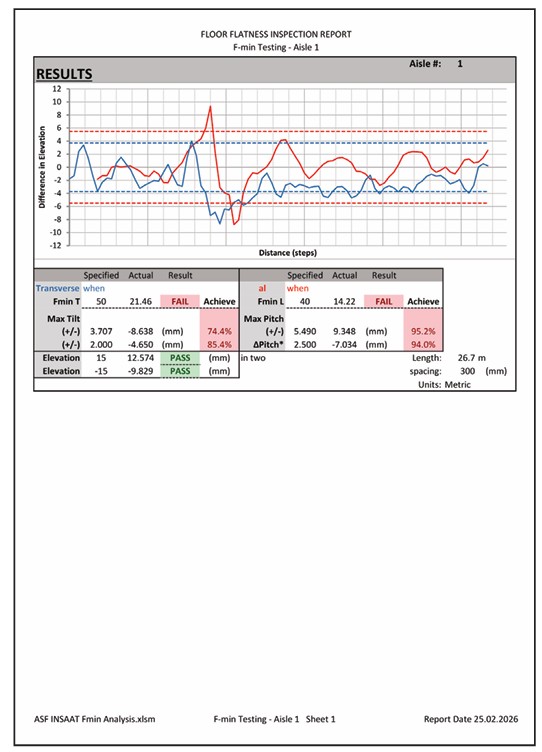
Post-measurement evaluation reports present not only numerical data but also floor behavior and operational impact in a clear and comparable format. All slopes and deviations are calculated with millimetric precision. Non-compliant points are visually marked. Results are compared with forklift supplier tolerances or relevant international standards. Reports are structured to directly guide the floor correction strategy and implementation plan

Global Site Elevation Scan (CAD Integration)

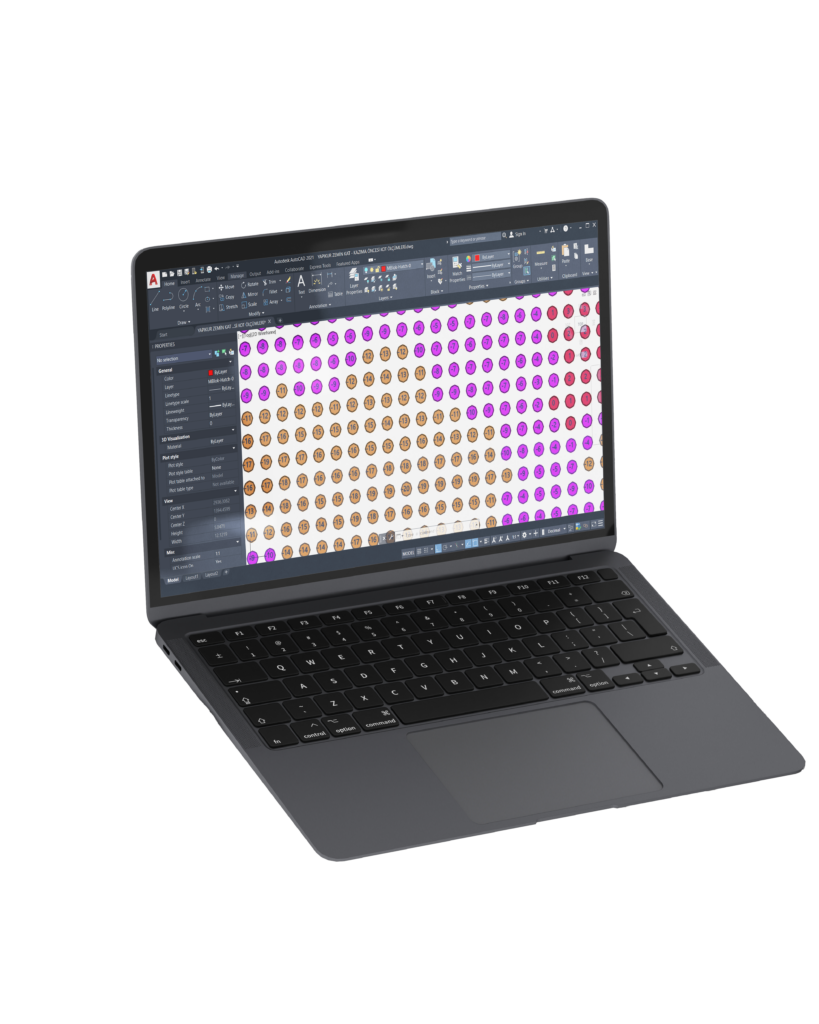
If required, the general elevation scan of the site is integrated into the AutoCAD project layout. All measured elevation points are displayed directly on the drawing. This enables a comprehensive assessment of floor conditions within a single coordinated plan, ensuring alignment between measured data and the project layout.

3D Elevation Distribution Visualization

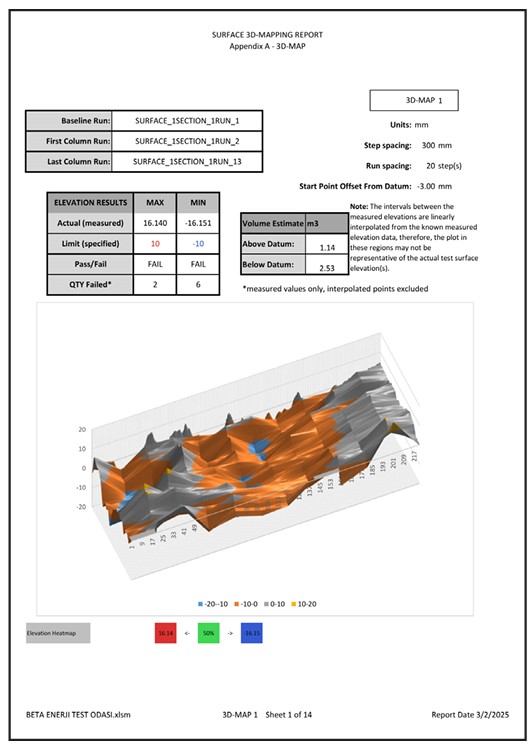
Using the measured aisle data, the floor surface is modeled in three dimensions (3D). This visualization clearly presents elevation differences and non-compliant zones in a simplified and intuitive format. Priority intervention areas can be identified immediately without requiring advanced technical interpretation.

Wheels Elevations (For DM)

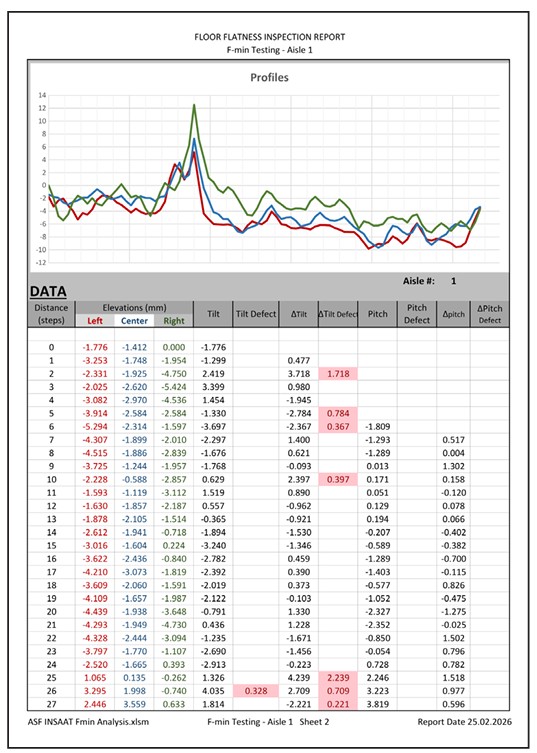
For forklifts operating along a fixed route, elevation scanning is performed along three separate lines across the aisle: right wheel track, left wheel track, and center
track where applicable. The elevation value of each measured point is recorded and presented in tabular format.

Required Flatness Tolerances

Transverse curvature caused by elevation differences between the right and left wheels is calculated. The variation of this curvature along the aisle is analyzed to identify geometric irregularities that lead to forklift sway and instability. Elevation differences between front and rear wheels are also evaluated. Areas exceeding the required flatness tolerances are clearly marked as non-compliant.

Accurate reporting ensures that floor performance is clearly defined, verified, and aligned with operational and equipment requirements. Every result is directly linked to recognized flatness criteria, forming the basis for reliable compliance and effective decision-making.

Explore the applicable flatness standards to understand how these tolerances define performance and acceptance limits in detail.

Planning

All elevation and reinforcement scan data are analyzed to develop a detailed execution plan. For each scenario, machine selection, grinding method, and removal depth are defined according to technical criteria. 

The implementation plan is supported with visual references and diagrams. Intervention zones and required correction depths are clearly illustrated. This structured presentation simplifies client approval and facilitates precise execution planning.

Explore more

Laser Grinding

Our advanced measurement technologies and engineering methods

International Flatness Standards

Detaily understand the flatness standards like ASTM, TR34 and VDMA

Importance of Floor Flatness

Why floor flatness can affect the operation's speed, safety, and cost..

Get In Touch
Find Us
Follow Us

Send us a message

Bu formu bitirebilmek için tarayıcınızda JavaScript'i etkinleştirin.